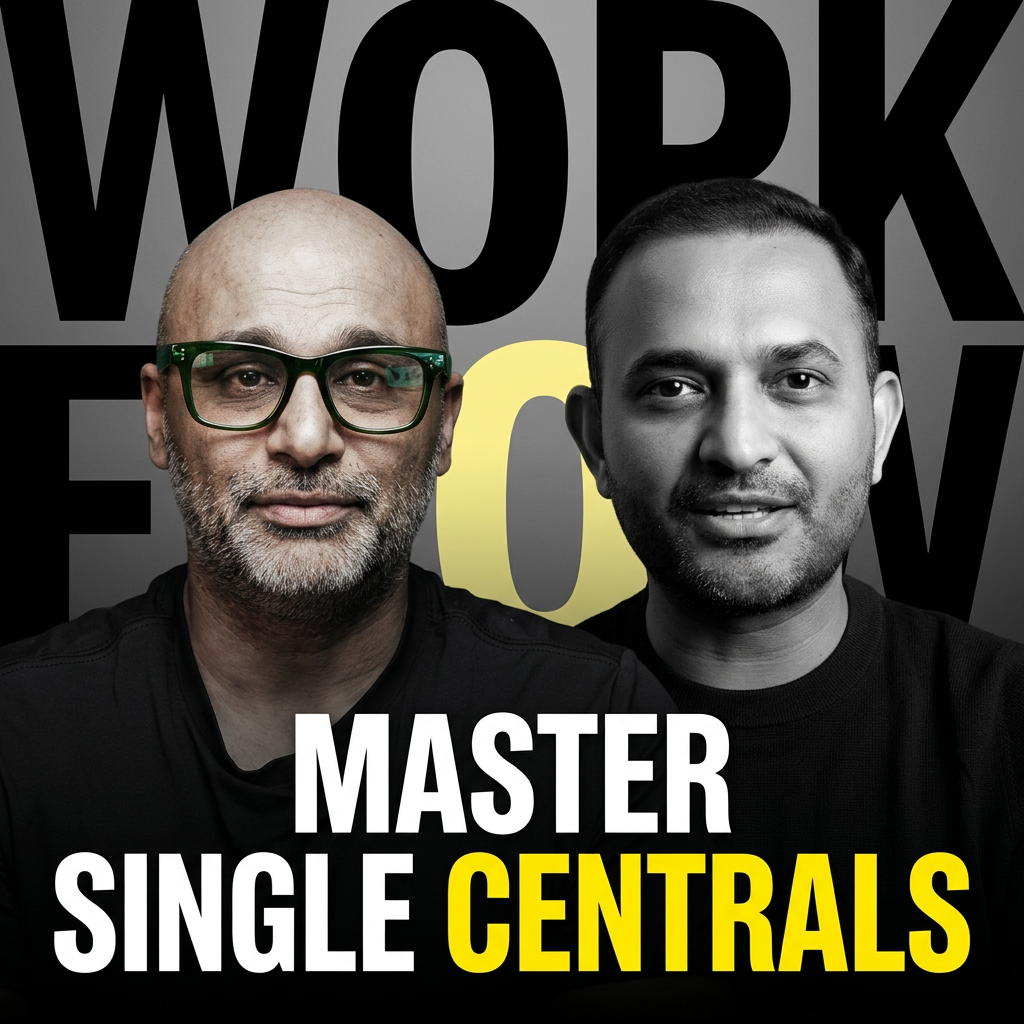
Mastering The Single Central Incisor

Episode 418 March 14, 2026 00:29:26
Mastering The Single Central Incisor
Dentistry Made Simple with Dr. Tarun 'TBone' Agarwal
Mastering The Single Central Incisor

Mar 14 2026 | 00:29:26

/

Hosted By

Tarun Agarwal

Show Notes

In this conversation, Tarun Agarwal and Dhaval Patel delve into the complexities of mastering the single central incisor in dentistry. They discuss the challenges faced by dentists, particularly in PPO and HMO environments, and emphasize the importance of a structured workflow for successful case planning. Dhaval shares his insights on digital dentistry's evolution and how it has transformed his approach to single central cases. The conversation also highlights common pitfalls in learning and teaching single central techniques, and concludes with actionable takeaways for dentists to improve their practice.


Takeaways

The single central incisor is a challenging procedure for all dentists.
Having a structured workflow is essential for success in dentistry.
Taking pictures is crucial for planning and executing dental cases.
Chair time is the most valuable resource in a dental practice.
Digital dentistry has evolved significantly over the years.
Common mistakes include inadequate planning and lack of understanding of materials.
A five-step process can lead to better outcomes in single central cases.
Evaluating work through a structured process enhances clinical skills.
Utilizing in-mouth techniques for staining and glazing yields better results.
Continuous learning and practice are key to mastering dental techniques.


Titles

Mastering the Art of Single Central Incisors
Navigating the Challenges of PPO and HMO Dentistry


sound bites

"You need to have a workflow for everything."
"Chair time is the most expensive thing we have."
"You need actionable items at each step."


Chapters

00:00 Mastering the Single Central Incisor
04:11 Navigating PPO and HMO Dentistry
06:39 Planning for Success in Single Centrals
14:40 The Evolution of Digital Dentistry
20:53 Common Pitfalls in Learning Single Centrals
27:45 Actionable Takeaways for Dentists

Register at 3d-dentist.com/summit Use code TBONE40 at checkout for 40% off — doctor tickets drop to $14.97, team tickets to $8.97. Includes a ticket to Universal Studios.

Connect with TBone: ️ Dentistry Made Simple Podcast — available on Spotify, Apple Podcasts, and YouTube Instagram: @tbone_dds LinkedIn: Dr. Tarun Agarwal 3d-dentist.com

#DentistryMadeSimple #3DSummit #DentalPodcast #DentalLeadership #PracticeManagemement #ImplantDentistry #CosmeticDentistry #DentalCoaching #3DDentists
View Full Transcript

Episode Transcript

[00:00:00] Speaker A: let me guess have you ever walked into an operatory and have a patient that wants you to fix one tooth but it's a front tooth on top of that they're picky the single central is quite frankly probably the most difficult procedure in dentistry this week i'm talking to one of our three d summit speakers who has honestly pretty much mastered the single central incisor doctor daval patel davil how are you doing my man [00:00:26] Speaker B: good t how have you been i've [00:00:28] Speaker A: been fantastic i'm trying to keep up you know i think there was a time in life where you're trying to keep up with me and now i'm trying to keep up with you you know clinically i want to be as good as you man i don't think [00:00:38] Speaker B: so dude the hierarchy is you're always here and i'm always following in your [00:00:42] Speaker A: footsteps no no please don't do that don't do that well i have so much number one thank you for coming on the podcast thank you for agreeing to speak at our three d summit april thirtieth through may first in orlando florida twenty twenty and i think your topic the single central incisor is a timeless topic because it's it's that restoration it's that service that procedure that just gives you fear and anxiety whether you're one year in twenty five years in forty years in digital dentistry analog dentistry master ceramics self ceramist it's one of the most difficult procedures in dentistry tell tell me your thoughts on that you [00:01:25] Speaker B: know what you're you're right i honestly i still struggle with single central you said i've mastered the art of single [00:01:31] Speaker A: central you said you're pretty close okay [00:01:35] Speaker B: i don't know if i'm pretty close i'm getting there but every time i think i'm good at it you know you'll get a single central that will throw a curveball at you and you're still trying to figure out how to go about it however just like everything in life what i've figured out and you know i've learned a lot of these things from you is you need to have a workflow for everything you need to have a process and i keep telling myself trust the process that you build for yourself when doing single central i always start with pictures you know photographs you taught me very very long ago that hey the number one thing the number one technology that's going to help you do dentistry better sell more dentistry get better results it is the digital camera and i use it a whole lot so i would say step number one would always be taking pictures and planning the single central there is there are so many variables when it comes to single centrals right we all know this what are you replacing are you replacing a pfm what are you matching what is the stump looking like you know how much space do you have what is the occlusion looking like you know if you restore that single central and keep it symmetrical are you going to end up with the diastema are you going to close the gaps you know there's so much to look at and once i have the pictures and i plan that step two is always going to be preparation and what i mean by preparation is just not how you prepare the tooth but also how you set up the case how is the tissue symmetrical are you going to have to do some gingivectomy you know gingival plasty something on those lines depending on the gaps are you going to have to prep any deeper just to get a good emergence and then it's all based on good anatomical reduction iu looking to change the position of the tooth are you looking to keep the position of the tooth as is so that all falls into preparation step three i say so hold on [00:03:27] Speaker A: hold on davil you lost people you're too excited am i you're too excited i know you love this let's back up for a second okay patient walks in okay so i'm always gonna i'm gonna focus on it from the business side of things okay so number one i want to frame this properly for you you're a ppo dentist in a ppo environment i'll take it back you [00:03:49] Speaker B: have ppo and an hmo dentist so [00:03:52] Speaker A: okay so even worse even worse yeah even worse you're a ppo and hmo dentist how do you structure your fees or do you structure your fees that allow this to be i don't want to even word profitable wording and not overly time consuming on this let's start let's start there let's start at step [00:04:11] Speaker B: zero so well as far as fees are concerned i pretty much go by what the insurance dictates and that's where the efficiency steps in so if i'm allowed to charge an upgrade depending on the insurance i will go ahead and do that if not my goal is to be as efficient as possible and i've changed my workflow over the years for the longest time i used to try and finish the case the very same day but now what i'm trying to do is obviously a lot of my audience know that i have been going into five axis milling now and what i'm trying to do now is i would temporize the patient and bring the patient back now what that allows me to do is it allows me to mill multiple restorations with different translucencies or different materials just get a few different restorations ready and when the patient comes back for the delivery i'll i'll try those restorations in i will make sure pick the one that fits the patient best in terms of value and then it's a simple twenty minute process from then on for me to characterize the case so let's hold on hold [00:05:14] Speaker A: on you're getting too excited again so here's my advice to our listeners on this you've got to charge an appropriate fee for this level of work even in a ppo environment okay you've got to charge an aesthetic upgrade you've got to charge something to justify the time and the technology and milling multiple materials so we've got it we've got to dictate we've got to be reasonable and honorable to our practice now so with that being said let's step to so let's let's step back okay from okay i walk into an operatory i take my photos let's pretend the patient gives me all the money in the world okay whatever it is what do you think the most one thing that an office misses or a dentist misses when thinking about doing the single central what is probably the biggest pitfall or the biggest mistake that you've made or you see offices make when doing a single central on the planning side of things [00:06:10] Speaker B: i'll start with myself because i've made several mistakes and i do a lot of training on this and i see the attendees who come to my workshops and i ask them i think most people can be taught a lot of things but unless they are taking pictures and they're planning the case they're thinking through the case ahead of time if they're not doing that i think they're not in the game so i would [00:06:33] Speaker A: say what are the few what are the few things planning things that you're so like let's just pretend our person lists our person listening takes the picture they have no earthly idea what they're looking at what would be just a couple of things that you would look at in that picture just assume the dentist is not doing high level dentistry already they're you know to level up [00:06:53] Speaker B: well let let's okay let's let's set up a case right let's say you're replacing tooth number eight are you putting crown on tooth number eight the first thing you'd have to look at is what are you going to match to what's on number nine is that a natural tooth is that it's a natural tooth let's say it's a natural tooth right so now let's go back to number eight so if it's a natural tooth then you're looking at okay is there a lot of characterization on the tooth and when i say characterization i mean two things is there a lot of anatomy going on like a lot of grooves on that tooth and is there a lot of colors is there natural colors on the tooth so that's what i'm looking at okay that tells me how much time do i have to dedicate to this particular case when it's going to come to characterizing you know once i get the form ready once i get the shape ready once i have the exact shape in my milled crown then it's going to be the part where i characterize it right so if it's going to be an extremely difficult one then sometimes you may need to put the crown in the oven one or two times however with the advent of newer materials like the miyoo eight hundred and fifty and the miyoo aesthetic kit that we have at our disposal i have found compared to what i was doing in the past most of my cases i would say i get them done in one fire i mean for the people for the analog audience listening if what they don't know what firing means is how many times are you taking the crown and putting it in the oven so okay [00:08:15] Speaker A: so that's referring to color that's chroma translucency you know basically shade tab let's call it the shade tab i think you touched on something that was very it took me some time and i learned this in direct composite dentistry earlier in my career is you can match the color perfect you can match the shape perfect but if you don't get the texture of the tooth right the reflections don't come through so you had mentioned in there that when you when you're talking about matching you're talking about one the color and then two is the surface texture so what would be some things that you can do to kind of get get surface texture a little bit closer between number eight and [00:08:55] Speaker B: number nine okay let's let's back up a little first okay so perfect before the surface texture if we can get the shape of our contralateral tooth let's say about ninety percent right and for cerec users or exocad users you know using the copy and mirror technique i don't know exactly i'm new to exocad and you can kind of correct me on that i don't know exactly what the term of matching is the contralateral tooth and exocad is but these softwares have made it so easy where you can get the shape of your restoration almost ninety to ninety five percent perfect compared to the contralateral tooth right so [00:09:31] Speaker A: once you so for those that don't know you click the in exocad you click the tooth it literally copies it and mirrors it and then you kind of position it back into place almost like setting a denture tooth but but you're copying the neighboring tooth or the opposite tooth on the other side of the arch and cerec is a little bit more difficult but very very similar [00:09:54] Speaker B: in that so once you get that i call it the post mill contouring technique basically i two things one is a colored pencil just to make sure my line angles are symmetrical and a lot of analog dentists line angles are your mesial and your distal line angle for the most part and then i use a very simple method of just rubbing the articulating paper on the facial surface of your contralateral tooth and on the facial surface of your restoration and just observing the anatomy the texture on both the teeth and then with just the help of few simple burrs trying to recreate the texture on your contralateral tooth onto your restoration so if you're seeing a depression just create a depression if you're seeing a convexity just go ahead and create a convexity if you're seeing some texturing in terms of striations or something like that just go ahead and create some striations and what i've learned over the years is it doesn't have to be perfect all you need to do is kind of create an illusion where it looks very close to the contralateral tooth that's it so for [00:10:58] Speaker A: those listening you might be wondering hey if i copy the exact tooth the neighboring tooth how does all the anatomy and everything not come out perfectly and that's a milling issue so depending on the milling that you're doing what burrs you're using what material you're using it may not mill in the exact detail of the of the digital design so that's when you have to manually accentuate the design so as we move forward i want to point out three things that davil talked about number one was matching the shade that's your gingival chroma that's your incisal translucency that's your general shade value of the tooth number two he mentioned line angles line angles is taking a tooth that may be ten millimeters wide and making it look eleven millimeters wide or making it look nine or eight millimeters wide by simply moving in the line angles and the curves to make teeth look symmetrical or make them match each other and then the third thing he talks about was facial texturing and that's really about making teeth reflect and bounce light off so that way it looks very nice and i think honestly if we can work on getting those three things right the shade pretty close and none of them have to be perfect the shade pretty close the line angle is pretty close the surface texture pretty close you're ninety percent of the way there on single centrals you know and i think those that's three real keys and when davil's speaking at the summit he'll be sharing exactly this through pictures through exact techniques and if you want to learn more he does these single central anterior workshops throughout the country and so you're welcome to certainly i've been through the program it's made me a better dentist i would encourage anybody listening especially if you're a cerec user to consider attending his anterior program it's in my opinion the best anterior program out there for syracusers certainly so davil the next question so you started dentistry not just fully digital you were analog when you first started for [00:12:59] Speaker B: a few months i would say a [00:13:01] Speaker A: few months so how is digital okay let's say let's look at this differently then you've been digital for a long time i would say digital dentistry digital [00:13:09] Speaker B: all my dental life let's just put [00:13:10] Speaker A: it that digital dentistry today looks very different than it did twelve thirteen fourteen years ago when you started okay so how has digital changed how have you changed with digital and how has digital changed how you approach these single central [00:13:26] Speaker B: cases okay so what i again i kind of alluded to this earlier is i was always of the mindset that i have to finish the case same day but as i'm getting more and more busier i'm also trying to look at efficiency and obviously i have a more discerning eye as well you know there were cases that i felt were adequate back five seven eight ten years ago which i would look at it right now and i think i could have done a lot better so the way i'm approaching cases now is i would prep the tooth i would go ahead and use my cerec and make a very decent temp out of a milled material and that also helps me kind of dial in my design in a way and put that as a temporary and let the patient go okay because i just want to get the case started and you know then what i'll do is when i before i bring the patient back obviously based on my findings based on the pictures based on the planning that i have i will look at the case and i will mill two or three restorations based on the translucency that i'm looking for and typically what i have learned is anything that you do to a mill restoration will drop the value of that restoration for example you dry try and for people listening dry try is basically you know when you don't have any cement or any trying paste a restoration can look different but the moment you try it in with a try and paste or even water it will look different the moment you polish it it's going to go ahead and drop in value it's going to look darker the moment even if you put clear glaze over it it can look darker if you put any sort of colors it can look darker if you cement it with any shade of cement it can be clear cement as well it's going to look darker because the stump is going to shine through so one thing i always do is i mill the crown in a slightly higher value than my target value because i know it's going to drop and if i'm not one hundred percent sure i'll kind of mill a couple for example if my target is a one i might mill it in a a one a b one and maybe a bl four like a bleach shape right and then when the patient comes back on the delivery appointment now my shape based on my planning based on my software is pretty much done i milled these restorations now it's a simple thing of trying all of these crowns in and figuring out which one has the best value i'll show it to the patient obviously i'll take pictures myself and it's a very simple process it's it takes me about five to seven minutes to do this once that happens because of my planning i've already have the colors in place right in my mind i know what colors i'm going to use i use mio system the miyoo eight hundred fifty and the aesthetic system i'll bring it chairside i know there are two or three maybe four or five colors that i need to use i'll bring it chairside and it's then it's a simple process of intraoral characterization based on the pictures and the patient in the chair [00:16:19] Speaker A: i want to i want to point out something a few things that davil talked about that i think are very important number one is the most expensive thing we have is chair time so if i can mill two restorations and maybe it costs me dollar twenty extra but it saves me another appointment or sending something back totally worth it and so when when i've milled back in my day when i was doing single centrals and i'm not doing them hardly that much anymore but sometimes again this will date me a little bit i might mill a b one empress a b one emax lt a b one emax mt i very rarely did singles in ht but i might mill three different translucencies and i think you had talked about that earlier three different shades [00:17:01] Speaker B: how ht could work really well in older patients i was of the belief that ht doesn't work well but you have older patients with a lot of gray shades with a lot of on [00:17:11] Speaker A: a lower value absolutely and ht will [00:17:15] Speaker B: just knock it out of the park you use an empty there and you could struggle so at the summit when i go over my lecture i will show the viewers in the attendees you know pick material based on age group and based on a whole lot of different factors right but hd is a translucency that i use a whole lot for my single centrals absolutely and so [00:17:35] Speaker A: he talked about that and then so we have to understand that that chair time is valuable so we have to know that different materials having those ready and then the other thing that he talked about that that is unbelievably valuable is in the mouth staining and glazing so it's really in the mouth staining where you have the tooth on the you have the restoration on the tooth and you literally take your brush and you kind of do it right next to the tooth so you can get the best match you can feather things down you can increase your yellow decrease your yellow and then taking it off and firing it i've always found that when you do it in the mouth you get the best results because you're seeing it directly next to the tooth is that what you're referring to davil [00:18:18] Speaker B: one hundred percent and you know it blows my mind when people think wow you do it in the mouth i'm like what is tell me another way you'd want to do it yeah it just doesn't make sense i mean if you are a cat chem dentist and if you have the privilege of the patient being in the chair with why would you not utilize that benefit and put it on the patient's tooth itself and visualize the colors right next to the tooth that you're trying to match [00:18:43] Speaker A: it to yeah it's it makes things easier honestly so all right so i want to kind of so i want to a couple of more topics on this one okay because i want people to come to the summit i want them to get to meet you i want them to ask you questions i want them to hang out with you you know things that you you know a podcast can teach you only so much right when it comes to ce and learning single centrals what would you say is where where do some where do people learn things incorrectly what is something they learn wrong or don't learn learn correctly when it comes to one or two unit anterior cases where do [00:19:19] Speaker B: they learn it wrong no like what [00:19:21] Speaker A: are some of the things what are the pitfalls that people make in learning or teaching single centrals you know i [00:19:27] Speaker B: can't comment on what people pitfalls people make on teaching them but you know i have a process that i teach and i feel i teach from a perspective of how i've learned it and how i practice it so i pretty much teach what i preach and i practice that daily it has to be a process it's my five step process i'll kind of quickly repeat that one more time please do okay step one is pictures and planning if you don't take pictures and if you're not planning the quiz you're not in the game okay step two is preparation you know how much tooth structure do you need to remove and that's based on the position and the shape of the tooth that's based on the color of the tooth that's based on what you're trying to match it to for example if it's a nice color on the contralateral tooth and your your tooth itself is not super dark you can be very minimal with your preparation but if it's a dark stump then you're going to have to prep a little more to kind of hide the dark stump are you going to be using opaquers are you going to be putting a deeper margin to get good emergence are you going to have to do anything to the tissue that all falls in the preparation step three is your shape and form which pretty much falls under the software how are you going to what design methods within the software whether that be cerec or exocad i don't care what you're using you know you can be any cat cam dentist i don't care that you're utilizing to try and match to the contralateral tooth right that's your step three and again the goal is to not spend a ton of time on the design and on the software but get it to the point where it looks about eighty five ninety percent you know compared to the contralateral tooth and if you can get it to a hundred even better but remember you know the shortcoming is the milling can the milling machine mill it exactly like you've designed step four is your post mill contouring which is finding your line angles and the anatomy and the texturing is your step four and then step five is finishing and what falls into finishing is either you're going to polish the restoration or you're going to characterize the restoration and if you're going to characterize the restoration depending on the complexity of the case how many fires do you need one two maybe three on very few cases but that's pretty much my five step process you follow those five steps and i can guarantee you that you will have a much better result compared to you just doing a case mindlessly i think a lot of people look at a single central and they have no plan in mind they just prep the tooth and then they figure out i don't even have the material they don't even understand materials you know do they know the difference between high translucency low translucency and medium translucency do people realize that there is a great block like empress multi that we can utilize and simply polish it there's a host of different materials out there beta vita mark two you know and those have served us very well over the last few decades so all of that i think it needs to be step by step process and within each step you need actionable items these are the things that you look out for at each step now and then once you once you have this learning if you keep practicing if you keep doing cases and if you just kind of drink the kool aid and just follow the process i can guarantee you that you will have a better result [00:22:39] Speaker A: so here's what i heard everybody is davil number one is humble but what separates him it's a cookbook it's a cookbook process step one step two step three step four step five and honestly if you evaluate your work before you start by answering those five steps and then if you're really interested in getting a lot better if you relook at your work after you're finished through those first those five steps you will become a phenomenal clinician and you will start doing way better dentistry and way more aesthetic dentistry so it's the recipe it's the process it's kind of like what we teach at three d dentists from a business side of things is it's here's the process here's the four step process to gain case acceptance here's the five step workflow to make single centrals single incisors predictable and precise with the outcomes and that's what's separates people let [00:23:38] Speaker B: me interject right there and kind of tell the audience what i learned from you if you remember back in the day when i learned the integration of cbct and planning with you to this date i still follow your advice and i still go ahead and print out exactly protocol the checklist and i put it right next to or i tape it on the wall just like you showed me and just like you taught me and even though my software may have changed even though instead of milling now i'm printing my guides but the process remains the same i have it right there in front of me so i know which drill i'm going to pick up you know my assistant knows whether you taught me whether you're going to punch or you're going to use you know are you going to flap right and my assistant knows to set up for a blade i write those things down manually on that piece of paper and tape it right there and if i don't do that i think i'm more likely to make mistakes even though i may have planned the case perfectly so that's a very important piece in the whole cogwheel and just making sure i do that every single time so i follow your advice on that [00:24:38] Speaker A: well thank you dal look i believe a checklist you know for those of that have read the checklist manifesto you understand how important a process is honestly to me the process isn't for the dentist the process is honestly for the team members because for us the dentist honestly these processes are baked into what we do after some point in time but being able to give your team the process to let them know what's happening know what steps you're going to take what order you're going to do things gives them confidence and allows them to support you better and honestly allows them to help you become and do better dentistry so so that's important so davil a couple of things before we get done what will what what do you think somebody coming to the summit and hearing your program what will be some actionable takeaways they can expect and then for people that want to get to know you more interact with you more learn from you where can they [00:25:32] Speaker B: do that well let me answer your first question first so you said what are the actionable items i can take away from my talk i'm going to break this five step process down for them i'm going to show them every single actionable step that they need to take within the five steps and give them a cookbook recipe on how to deal with these single central now once you have that i mean it's up to them on how they implement that in their practice based on what kind of software they're using and like i said i can guarantee you if they follow the process and they make it a point to practice perfection every single time or at least close to perfection they'll get great results where they can reach out to me they can check my workout on my website i write blogs it's keep catcamming dot com keep c a d c a m i n g com it's the same on facebook i have a group called keep cat camming you can follow me on instagram keep cat camming i also have a youtube channel keep cat camming and if you need to reach out to me you can email me at double d eight a v a l d d s at yahoo dot com well [00:26:39] Speaker A: you had us until you said at yahoo dot com that's fine yeah like like dude come on man at this point why can't you get keepcadcamingmail dot com and let that be your email [00:26:50] Speaker B: address whatever i want but there's too many people that know me and everybody has the yahoo address and i don't have the mental strength and energy to reach out to each one of them and change it there's this thing called [00:27:01] Speaker A: forwarding just so you know it doesn't [00:27:02] Speaker B: matter dude i'm just gonna live with it i'll die with yahoo it's okay [00:27:06] Speaker A: well davil's too humble davil what is your facebook group up to now twenty eight thousand thirty thousand people thirty six thousand people on your group davil runs that like a maestro he is active creates a very open community [00:27:23] Speaker B: so you were technically the number two of the group and i don't know when was the last time you checked out the [00:27:28] Speaker A: group i checked out the group just two days ago i just i went in and left but i'm going to get better i'm going to get better [00:27:35] Speaker B: i promise i need to take you off your admin duties i mean i'm still you're still the admin in the group i know i need to kind of chuck him off of his duties [00:27:45] Speaker A: i'm not a good admin anymore well davil thank you so much for participating i'm excited to have you there the one thing that you didn't mention is you have your own keep cad camming meeting it's in october october twenty twenty what are the exact dates davil so [00:28:01] Speaker B: yeah october fifteenth sixteenth seventeenth in austin texas the third annual keep cad camming meeting what's different about this meeting is not only are you going to hear from industry experts on the latest in cad cam technology but we're going to have ten hands on workshops and this is going to be a three day meeting if you want to deep dive into the latest stuff in cad cam come to the meeting listen to the experts and learn everything about three d printing or five axis milling or just will have workshops on mastering the single central if you are not good enough on prepping for partial coverage restorations like inlays and onlays if you want to learn how to three d print dentures and partials and veneers and you know prepless veneers there is a workshop for everything that you want it'll be there again october fifteenth sixteen seventeen in austin texas and we will be putting out the links very soon within the next couple weeks for education yeah absolutely you're [00:29:03] Speaker A: an amazing clinician amazing dentist i want everybody to come to the summit it's going to be an amazing program april twenty ninth through may first orlando florida twenty twenty six universal tickets are included for thursday evening after the event so i hope to see everybody there if you want more information visit www dot three dash dentists dot com

Other Episodes

Episode 193

June 15, 2020 01:08:31
Episode Cover

5 Ways to Improve the Culture of Your Practice

When it comes to running a dental clinic, or any business for that matter, culture trumps everything. The culture you cultivate in your practice...

Listen

Episode

March 14, 2019 00:37:31
Episode Cover

IDS Day 2 at IDS

IDS Day 2 in Review--- Send in a voice message: https://anchor.fm/tbonespeaks/message

Listen

Episode 227

February 15, 2021 01:17:12
Episode Cover

Elevate Your Social Media Presence with Tejas Patel

Tejas Patel is a Cosmetic Dentist who owns Austin Cosmetic Dentistry by Tejas Patel. His practice offers cosmetic, preventative, implant, and restorative dentistry. He...

Listen