Episode Transcript
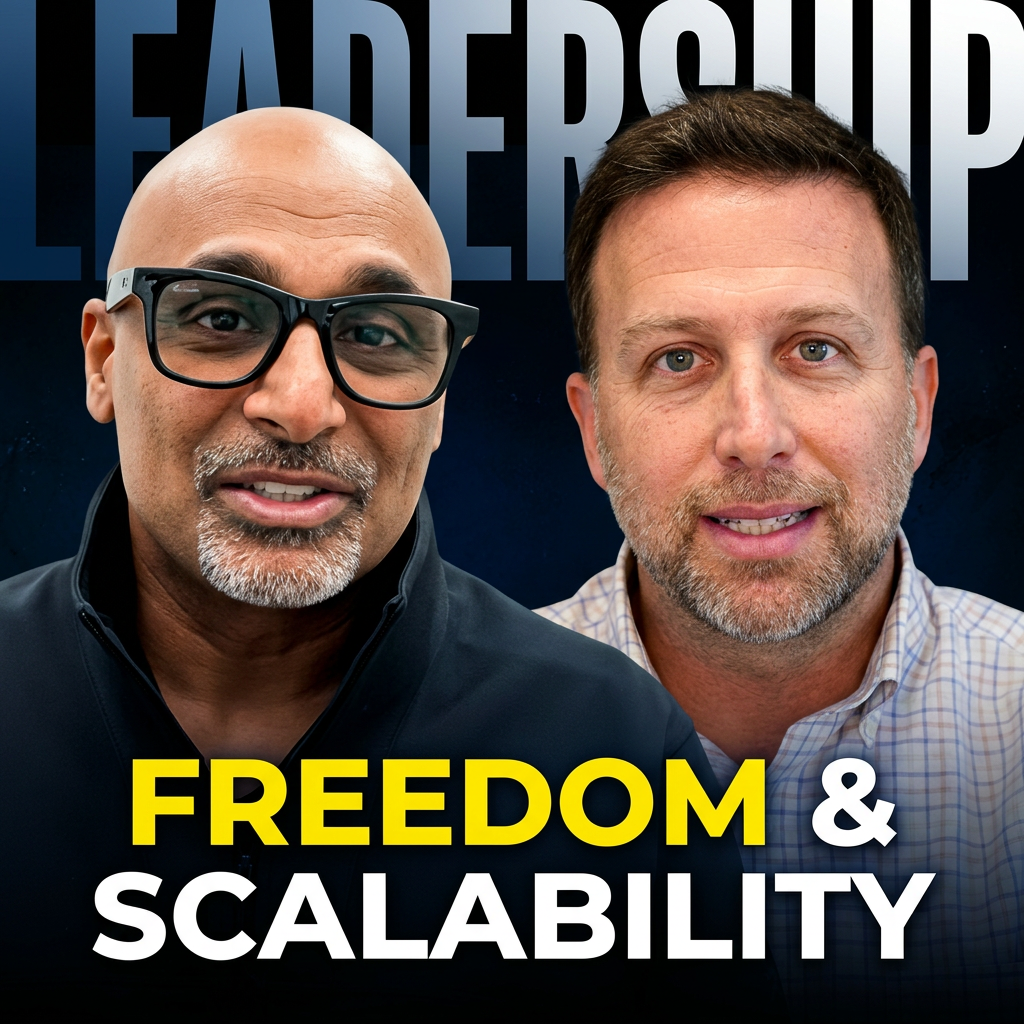
[00:00:00] Speaker A: It's anything you want it to be. Hey, everybody, listen. Have you been learning clinical dentistry? We spent four years in dental school. We spent thousands of hours learning clinical dentistry. But here's the truth. Very few of us, if any of us, have spent any time learning leadership and learning how to run a business. And on this week's episode, I've got one of the masters and truly gifted people in dentistry, Dr. Craig Spodak, to talk to us about leadership on our podcast. Craig is also one of our 3D summit speakers, and he's going to be diving deeper into leadership. Craig, how are you doing, my man?
[00:00:37] Speaker B: I am. When I'm with you, T Bone, I am amazing. You know that? I love you so much. We were just talking about the times we walked around Delray beach and all those good times we've had. We've had a good time.
[00:00:49] Speaker A: And then I. Then I noticed. I said to myself, clearly, I'm not as smart as Craig, because I didn't chose Delray beach as my home, because that place is beautiful.
[00:00:59] Speaker B: Well, I grew up in a. In a time when, you know, when people are like, you live in Florida. My grandmother lives in Florida. What do you. You know? So when I was like, 18 and 20 in college, and people were like, what are you doing there? Like, do you play shuffleboard? Like, there's nothing going on. So Florida grew up around me, which is great, thank God. And now, you know, obviously, with COVID really kind of separated things when people could work remote, people are like, hey, why am I taking a train one hour and to work every day when I can move to Florida? So, yeah, I'm blessed that Florida matured around me. It wasn't always the place for a young, younger people to be. It was usually a place you go and you retire.
[00:01:36] Speaker A: Well, you're pretty close to being old and retired, so. You're right.
[00:01:39] Speaker B: I sure am. Yeah. For those that are listening, yeah. When you turn the video on, you'll be. You won't be. You won't be happy. I'm 54 years old, t Bone. How old are you, bud?
[00:01:47] Speaker A: I just turned 52 months ago.
[00:01:51] Speaker B: Got it.
[00:01:51] Speaker A: And I'm almost in the best shape of my life.
[00:01:53] Speaker B: Yeah, you look at. By the way, the AI version of you that I'm seeing online is you're a stud. Like, I need to do an AI version of you.
[00:02:01] Speaker A: Imagine what you tell it to chisel your face. I actually told it to make me look a little Tom Brady.
[00:02:06] Speaker B: Yeah, you do look. You look.
[00:02:07] Speaker A: You.
[00:02:08] Speaker B: Honestly, when I saw it, I'M like, damn, this guy looks great. I'm just happy that you know that you have this version of you out there.
[00:02:15] Speaker A: Well, I'm getting ready to turn it evil. So soon you're going to get the evil anti T bone AI version. But listen, all seriousness aside, okay, all joking aside, why is leading people harder than the most difficult clinical procedure in dentistry?
[00:02:32] Speaker B: Well, before we get to that, I just want to say what the natural trajectory of a dentist is and what I find because I have the opportunity to mentor some, you know, hundreds of people through my network, and what the typical trajectory is, is you get out of school, you don't know very much clinically or leadership wise, and you're like, look, I'm doing fillings. I'm not going to be able to pay my student loans on this type of treatment. So let me educate myself. You become the master of the quadrant. You do multiple grounds fillings, you're like, okay, life is pretty good. But still, my unit, economics, for the amount of time I put in, is not exceptional. So let me go and find a full arch master or an FMR master, or learning implants and learning all these things because we want to create the most amount of value with our hands.
So we become the apex predator of dentistry. What does that mean? 800amillion, five, two, three million dollars you can produce with your own hands. And life is really good. But just like life will always do, you have now new problems. Now it's like I can't escape the chair.
So even though you're making shit tons of money and you're super happy, you're producing two or three million dollars, you got everything you wanted, but now you're like, I have no freedom. So what I find is most dentists tell me they want to make a lot of money, but when we really distill it down, what most people want is freedom.
Freedom to say, it's Wednesday, I want to leave. It's, I want to go on a family vacation, I want to leave at 2 o' clock and see my son play basketball.
So we get what we chase. But in the, in the end, it's really. Most dentists come into our ecosystem, the bulletproof ecosystem, because they become the apex predator. They've gone to the courses, they learned everything and like, oh, shit, this is not what I really, really want. I want freedom. So therefore, if you want freedom, you're going to have to scale your business. You're going to have to make it work without you, which is really difficult if you're the highest producing person. So I think of dentistry as like clinical. A reducing clinical is like jumping out of a car. If you're an all on X provider, like some of your audiences, and you're doing two or three million dollars a year, you have to jump out of a car moving 80 miles an hour. It's hard to survive if you've just done one or two years of clinical and you like, hey, composites are easy, crowns are easy. Let me open up another office. Is dentistry so easy it's like jumping out of a slower moving car?
So the leadership question you ask is, there's a question before that, why do I need leadership? Why does it really matter?
Because if you're the master of your own domain and you're doing really well and you got four people on your team, you don't need leadership. And I talk to Dennis all the time and they say to me, you know, Craig, I don't know why you teach this stuff. My business doesn't stress me out at all.
And I say, well, hey, Chris, you know, with all due respect, you don't have a business if you don't show up. Nothing. You have a job. And I don't mean that in a bad way, because I want to point out my dad, you know, 84 years old, practiced dentistry for like 60 some odd years. If you ask my dad, what's one thing you could get, if you could wish for anything right now, what's one thing you would ask for? He said, I'd love to go back into clinical. And the reason why I say that is because dentistry is a beautiful profession and they don't want people thinking that they should become dental business owners. If you love dentistry and it works for you and you're making really good money and you take the money, the extra money that you're making, invest it, it's an amazing career like what you've done. You know, you've. You've been a very shrewd investor. So you don't necessarily need to have four, you know, three or four locations as long as you can invest in some sort of business. It doesn't have to be a dental business. But I just want to point that out.
[00:05:59] Speaker A: Absolutely.
Okay, so now the next part is really going to be talking about the gap of not being a good leader. And I think you're probably the best example I know of it.
Your building is what, 15,000 square feet, 13,000 square feet if I remember correctly.
[00:06:20] Speaker B: Yes.
[00:06:21] Speaker A: You're about to do a renovation, you're about to do an addition, correct?
[00:06:23] Speaker B: Yeah. Expansion Renovation. Yes.
[00:06:25] Speaker A: Okay, so your 18 operatories going to be 22, 23 operatories, your 10 dentists. And when I hear that, most people immediately think, oh, I'm a 10 dentist group. They think four or five offices and you're doing this in a single location practice. And which I think is the best business model in dentistry.
It may not get the best valuations, but I think it's one of the best business models in dentistry because it really does create the freedom. So kind of frame it to us this way. If you didn't have how much, how much did you have to grow as a leader, to grow beyond a couple of dentists and to get to where you have the freedom that you speak so highly of?
[00:07:07] Speaker B: So that was, that was the fundamental thing that I had to work on. The problem is I spent 10 years not knowing I had to work on that.
So leadership is really the ability to influence people, to get other people to, to, to do something.
And you can't influence people if you're judging them. You can't influence people if you don't see the greatness in them. I once heard a quote that really changed my life and I want to point out that for, for many years I was a very poor leader.
So there are people that may listen to this that say, oh, I worked for Craig, you know, five, 10, 15 years ago. And it's jokingly referred to amongst the people that have been here throughout my entire leadership journey. That's 15 years or 20 years. They say there's Craig 1.0 and 2.0, but Craig 1.0 was not a good nice person. I shouldn't say not a good nice person.
I would, I had typical leadership failures. What does that mean? I actually didn't believe people were capable of doing things. I felt like I was the only one who cared. And people have an ability to feel what you believe.
So what you have to do in leadership is the first person you must lead is yourself. You, you have to change your psychology because you can't influence people if you're judging them. And a quote that changed my life was, it was. If you treat people as they currently are, you make them worse. If you treat people as they could be, you help them become what they're capable of becoming. What does that mean? That means you have to see greatness in people. I used to, At Craig 1.0, I saw greatness in people, but I'd be like in my head like, you fricking dummy. Like, how did you not see the patient has this problem or how do you not do this? Don't you care? Care, what's your problem? And being all up in their face. And then I'd crush people.
Now it's like, you know, you have kids, you learn a little bit more, you see your failures. And I'm like, okay, these are.
[00:08:59] Speaker A: These.
[00:08:59] Speaker B: You need to meet people where they are. And I was blessed because I was surrounded by some uber successful friends and patients, and I watched them and I studied them, and I'm like, holy. They are doing things that I was not doing. You know, I once had a very famous entrepreneur. I don't want to mention his name, but he mentioned. He mentions me a lot in his podcast, but I listen to him. You know, you ever have one of these patients that the whole time you're working on Tebow and they had their phone up and like, you, like, he was literally having a conference call the whole time, but he said something along the lines of like, hey, hey, is this Donnie, the guy that doesn't get along with this father? And the other guy says, yeah, yeah, that's the guy. He's like, okay, book a meeting for me. I'll talk to him. So I said to this guy, I'm like, how many employees do you have? Like, 3,500. Why?
I was like, do you lead people differently if they have a good relationship with a father versus a bad relationship? He's like, I lead every single person differently. In other words, this maverick, iconic CEO knows about how to influence people. I know how to work with me. Shoot me straight. Don't compliment me. Tell me what I did wrong. Just tell me what I did wrong, how I could do it better. And I know how to act, but if you do that to a person who didn't grow up in the type of family that I grew up in, that crushes their spirit.
So it was a big aha moment of like, oh, my word. I am, like, being a leadership newbie, and I really needed to find this stuff. I started reading books, you know, From Good to Great and Five Levels of Leadership by John Maxwell. And I had so many great people around me. God put some amazing people around me. And I was like, couldn't believe what I learned from them. And they were not dentists. None of these people that I'm mentioning were dentists.
[00:10:40] Speaker A: That's what's amazing. So you bring up something very important as I'm thinking about this, and I think this is one of your quotes that I. That I read somewhere. And I'm sure, you know, like, if you're like me, you stole it from somebody else. It says people don't quit their jobs, they quit their bosses.
[00:10:56] Speaker B: Yeah, I didn't say that.
[00:10:58] Speaker A: You didn't say that.
[00:10:59] Speaker B: Okay, well, I might have repeated it, but I didn't come up with that. Yes.
[00:11:02] Speaker A: Yeah, yeah. I don't think we come. There's nothing. I remember when I went to Egypt, our tour guide had a saying, there's nothing new under the sun. So, you know, we all make up other people's stuff. So part of leadership is like, I have a meta.
When you, when you teach education, when you teach like you do, like I do, you really. You end up getting surrounded by motivated people most often. Okay. And I've yet to meet a dentist who doesn't want to grow a bigger business, who doesn't want to have multiple doctors, who doesn't want to have the freedom and flexibility that you and I talk about.
But they don't understand that people quit their bosses or people don't go somewhere because of their bosses. And so what I wanted to ask you about is specifically, what are some tactics or actionable things you do with team members that help you attract good people and help you keep good people in your practice? Because you can't build a 23 operatory practice. You can't go from 18 to 23 without attracting good people and keeping good people.
[00:12:04] Speaker B: Yeah. It reminds me of that African proverb. If you want to go fast, you go alone. If you want to go far, you go together.
And you're right. In any ecosystem, any business ecosystem that has thrived, the one commonality is long term relationships. You know, the compounding factor, like compound interest, pays a dividend, compound relationships. Relationships can compound and take you further.
You know, we talk about this in bulletproof a lot because we talk about enrollment. And tomorrow is our monthly call for our mastermind. It's a three hour call on enrollment. And really, when you distill it down, what you have been able to do, yes, you're a master at enrollment, T bone. But what you're really a master of is building relationships. Your patients, the questions you ask of your patients, you get to know them. You get to understand what their motivation is. They don't come in and say, hey, I want to do the $40,000, blah, blah, blah. You're like, hey, why has it been 10 years, Becky? Well, I've been scared. Well, congratulations, Becky. Thanks for making the first step and being with me today. And. And by the way, you know, we offer sedation, you know, and you get to know these people. And be by the time they hear the number, like, I love this guy. There's no one else I'm going to. And by the way, I'm sending my cousin who lives in Nebraska. I'm going to ever fly to North Carolina to see you. So we talk about the, the, the, the factors that lead to enrollment, the factors that lead to building a great business.
But all of it is just built on relationships. So what builds great relationships?
Being kind to people, getting to know them, understanding their dreams and their, their goals.
Lining them, creating an environment where they can see themselves in the future. The average dentist does not have a well thought out plan. You ask dentists around the country, what do you want? I want more money or I want five offices. Okay, what, what are they going to be like? You know, I don't know, are they going to make money? What are you talking about? Well, what type of dentistry are you going to do?
[00:13:58] Speaker A: What do you, whatever.
[00:13:59] Speaker B: There's no, there's no context. So team members have to write their visions, their futures within the context of yours. All the iconic business owners were able to accurately describe a destination in the future and a place like whether it's Disney World or Starbucks or Apple Computer. And, and people were excited to say, I want to be part of this. And that's the same thing you do in your enrollment process when you are a simple dentist doing quadrant dentistry. It's like, Becky, you have decay.
We have to get a crown. It's need based dentistry. Of course you need it. I don't have to decide. What your listeners do is you take them on a journey. Could you imagine not having to take your teeth out at night? Could you imagine not having the embarrassment of being married to a spouse for 15 years that doesn't know you have removable teeth? Could you imagine a future where you, you can chew better foods? Let me take you as your doctor on this journey to this better life I have in store for you. That's the relationship of enrollment and that's the relationship of business. Business is all about relationships.
[00:15:08] Speaker A: Absolutely. Like I, I feel like we're talking to each other at this point. Like, you know, it's, it's, it's so much of the same stuff. So if, if I were to.
So by the way, if this is hitting home and you're like, okay, this is like I always say, you know, I'm a listener of John Maxwell too, and I love his, the five levels of leadership and the five laws and all that, you know, he's talked so much about. Everything rises and falls on leadership. And, you know, any time in my life when something's not going the way I want, I will turn back to myself and say, where am I not helping people or supporting people?
Where am I failing? Where am I not leading people? And so if this is hitting home with you, you know, you need to come to the 3D summit. Craig's going to go deeper into this. You need to listen to the Bulletproof podcast. Craig goes deep into that. Him and Peter do such a great job there.
[00:16:01] Speaker B: Thank you.
[00:16:02] Speaker A: And there's so much. So, Craig, if I were a dentist, and I want to give people perspective, okay. Because when I first met you, okay, your practice was a bit smaller at the time.
And if I said to me, if I, like, if, like, like, I'm. Be open and honest, like, if I had 10 dentists, if I had 18 operatories, I could, like, what I would imagine is that I'm in the office working every single day, and that I'm stressed out because I'm the falling point for everybody's problem.
[00:16:30] Speaker B: You're the nucleus of everything.
[00:16:32] Speaker A: I'm the nucleus. Right. That's what I would think of. Right. So I want you to describe what does. What does leadership look like? Like, what does the outcome look like on the other end when somebody, you know, nobody will ever be perfect at leadership?
[00:16:44] Speaker B: It's a great question.
[00:16:45] Speaker A: Like, what. What is the carrot? Like, what am I going after?
[00:16:49] Speaker B: Yeah, it's a great question. It's very personal. So for me, the most important thing is that I should be replaced. Every leader should be replaced.
So my idea of leadership is that I train people. And by saying train, I don't believe I have the skills to train people in all the various aspects of a dental organization.
I want to help people understand that they can be leaders.
And many of our listeners right now are saying, yeah, this leadership, you know, bullshit, that's such a cliche, it almost feels weird for me even saying it. Leadership. But really what it is, is. Is people need someone to believe in them. And if you ask my team, some of my longstanding team, they'll. They'll say, Craig is the person who saw things in me before I saw them. Craig believed that I could do it before I saw I did it. The difference is, Craig, 1.0 saw it and beat you for it. Like, T bone, what the F are you doing? Don't be a jackass. Get your ass in gear. Let's go. That's 1.0. Still a beautiful thing. Like, hey, you could feel loved by that. But let's face it, most people don't have resilient self esteems. So now it's like, hey T bone, what do you want to create? Oh, I want to create this. Well, I believe you can do it. Let's do this. You know, this. Have you thought about this? Have you thought about that?
So what I, what my goal of leadership is is to be completely irrelevant. So right before summit, we had our bulletproof summit at the Ritz Carlton in August this past year. I had not been in the office for like maybe two months. And I came in with a lot of energy. I have a lot of energy and my energy was toxic. And multiple team members said like, wow, Craig just came in like a tornado. That was the word they used to. And right before I went on stage, I was being told that I was kind of being fired from my office.
Literally. Stage is I'm going to go on stage like tomorrow morning at 8am and my leadership team who was also there, was like, we need to talk to you. I'm like, does it have to be now? Like, yeah. And basically what they came up and said is like, we have to put you in a founder non decision role because as long as things are going well, what do I have to do?
So it was a very interesting state for me. And Peter was loving. Peter was there. The whole conversation was like, oh, I knew it. I knew you'd get kicked out eventually. But I have to remind myself that's what I wanted by saying kicked out. I still, you know, have, you know, a good deal of equity in the practice. I have taken on some partners here. Some of my doctors are now partners. But I mean, that's what I wanted. If you want to be replaced, don't be upset when you get what you want.
And the numbers are great, thank God, you know, everything's going great. I just don't know of everything going on. So when I come in and I opine or I give direction, I. It's like that, you know, Dr. Evil, like, hey, I'd love to have $1 million. Like, well, Dr. Evil, you know, you've been frozen for 20 years. We're actually a million dollar business. So I'm kind of, it's an enjoyable part for me. So. But I have to now channel.
[00:19:47] Speaker A: Does that mean you don't very rarely see patients at this point?
[00:19:50] Speaker B: No, I never see patients. So that stopped a while ago. So that's another funny story. So I was throttling down my practice several years ago and my now CEO, who was our coo at that point said hey Craig, what are you going to be doing this year as collections? I said well what did I do last year? She goes about 3:50.
And I'm like okay, let's do 2:50. She goes well no, either you do 400 or you retire. And I'm like haha. Like I thought it was funny because she's like a hygiene room in our EcoSystem can do 350 or 400. So you want to at least do that. Like we can't hold this operatory for two days for you to come in and dick around basically. And I'm like well no, I don't want to do 400. So you're retiring. I'm like yeah, whatever, we'll talk about it later.
Like literally three days later at a team meeting, she's like okay, Dr. Craig's retiring. I just went white. I was like, wait, what?
And she retired me because it was the right thing for the business. We can't hold up an operatory. And this is an important point we're arriving on when we're being intellectually honest with each other. And I'm hoping that people have the courage to look at this honestly. The business that you built as a dentist really never thought, you never thought beyond building it just for you. You built your business to suit you. And a business suits the customer, the client, the patient. So here I was like, I wanted to do 2:50. I wanted to do that. Cause I thought it was fun. I don't want to retire. But what's the right thing for the business to hold up an operatory for 2:50? Not in my ecosystem.
So I got pushed. What's more important, your wishes or the business?
And it was consistent. And every time I try to do something like hey, I think we should do a bonus system like this. Well that doesn't work. I'm like, well I want to do it. They're like okay, write a personal check. Then don't write an SDG Spodak Dental Group check for that. Write a personal check. And I wrote personal checks.
We can't violate the business. Businesses work on rules, laws and, and certain principles. And if you're running it like that at the back of your pocket. Oh, Becky's nice, I'll pay her health insurance. But Diane's new. I won't do that. Like you willing? You're running it all willy nilly. There's no system.
And without a system, it's chaos. And businesses thrive on systems.
So you can be you, but you can't do that. With your business.
[00:22:05] Speaker A: It's funny you say this as I'm listening to you, you know, off air. I was telling you that I was speaking at the California agd and I started my talk and I did it purposefully because there was room was a mix of dental students, younger dentists, and a few old fogies.
And I wanted to irritate the old fogies off the bat. And I said dentistry stopped being a healthcare profession about 20, 2016, and it became a business.
And it's the.
[00:22:33] Speaker B: Became retail. Became retail.
[00:22:34] Speaker A: Yeah, it became a business. A retail, whatever we want to call it, right? And man, those, those older guys are like, that's what's wrong with our profession. I go, no, that's the beauty of our profession. That's what allows me to be here speaking to you today. And my practice is still running. That allows me to do the type of dentistry I do. And so, you know, I talk about the freedom phase. Um, and I have five. At 3D, we talk about five phases of dentistry. Step one is associate. Step two is you become the owner operator, you own a job. Step two is you move into the builder phase. Sorry, Step three is you move into the builder phase, you bring on others. Step four is you become the signature dentist within your practice. That's kind of where I'm at right now, where I get to do the type of dentistry that I want to do and when I want to do it. And then step five is where you're at. Is that the freedom phase, where literally the practice doesn't need you anymore. In fact, many could argue the practice does better without you. And it's usually our mindset and our ego that gets in the way of getting us there because of what you just said, that we build something around us and not build something often around the patient or the customer.
And I hope that hits home with everybody. I hope that really hits home with everybody. So, Craig, what do you, what do you see for dentistry moving forward?
[00:23:49] Speaker B: Well, I love what you said and I think, you know, you, you, when I said it's retail, you said it's business. And we kind of went back and forth. But I want to double click on that just for one second because there could be non for profit business, there could be healthcare business.
Dentistry is not a healthcare business. It, in my opinion, it has gone more retail. And the reason why I say that is, you know, the advent of all these amazing technologies, whether it's clear aligners or all on X or laser assisted, you know, new attachment procedures, they're designed to take Somebody who is fine, they're being treated. But make it better.
So you could just have braces. You don't have to have clear aligners, but there's a premium price to that. You could have, you know, dentures, but we could have all on X, which is better, or lasers better. So when you're dealing with good, better, best, it becomes retail. You know, like, is Dunkin better or worse than Starbucks? Well, it's just a different environment, Little bit better branding, slightly better coffee, but they're both coffee. And when we look at what coffee was in 2000, the average comp for a cup of coffee was like 35 cents. It was the coffee shop on the Seinfeld show.
Like, it was like this mug of crappy coffee. And everything's been premiumatized, if that's even a word, premium.
So dentistry's gone that way.
And you don't want to, you know, resent it. You don't want to say, like, to the old timers, they're like, oh, this is ridiculous. Like, no life is going to change. It's just your response to the changes that predicates how happy you're going to be. If you want to, you know, resent the wind, you can do that or you can adjust. Adjust the sails, you know, and I never. I don't. I. I know. You know, there's. I wish that people weren't addicted to their devices because I think that's a loss. You know, I wish people were interacting, you know, more in person. And, and when I look at families around a restaurant, you know, I'm the old timer. Like, I wish people would talk again because I think it's good for you. But I don't resent or. Or have any animosity towards retail trends. And what I do see is the, The. The differentiation is now more important than ever. You know, DSOs are a. And I know I'm going to get hate for this, but I think it's a good force for dentistry. I am happy that there's.
[00:26:12] Speaker A: I can tell you that.
[00:26:13] Speaker B: Yeah.
So do I want to sell to one? No, because I built something that I really love. In fact, I got an loi about two weeks ago. It was really amazing. At a. A beautiful loi. I didn't go in for the idea of just running these guys around. I actually really could think of working with them and doing something different. But at the end of the day, the, the downside risk of me not knowing what my life would be like and me liking my life made me not want to Sell. So my hope for every single person that's listening to us T Bone right now, I have one sincere wish that people get exactly what they want and then love what they got.
Because in dentistry, what I typically see is people get exactly what they want and then hate it. And that sucks. To get everything you want and still be unfulfilled is the greatest hell ever.
So in the bulletproof ecosystem, I grill people, they lovingly say, like, oh, Craig's gonna grill you. Just because I want to pressure test why you want it. And money. For those that are, you know, recently at a school with big student loans, I get it. Money is existential and you need to make the money.
But money is a poor long term goal because eventually you will make money. Every dentist that's listening to this will not go broke.
You know, you could if you pursue five and seven offices and don't have sub systems behind it, that's a typical thing. You know, Office 1 is paying for Office 2 and Office 1 is paying for Office 2 3 and then you have to hold.
[00:27:35] Speaker A: Usually it's the predator dentist is paying for all five offices.
[00:27:39] Speaker B: Yeah, yeah, yeah. The apex predator. Yeah. You actually think you make a ton of money. No. You just work your ass off and you own Office 2 and 3, which are both costing you money. You might as well go skiing because that costs you money too. But at least it's fun.
So I don't know, I got, I went way off the rails here. What was the question again? What do I see for the future,
[00:27:57] Speaker A: what the future of, future of dentistry looks like?
[00:28:00] Speaker B: I'm very positive on the future of dentistry. I am more bullish on the future of hygiene and the mid level provider. So the profession will expand.
But my thought, my thought is that there's going to be more room for growth from the mid level provider slash hygiene role. I'm very bullish on hygiene. I think, you know, when we look at state legislature and how the scope is moving into hygiene, it's happening whether you like it or not. Even in the state of Florida, which is always very slow. We're getting more and more and more scope put into the hygiene role. So I'm excited about like the mid level provider. I look at medicine and medicine like the physician assistant and the mid level provider expanded rapidly. Additionally, medicine funk now, now focuses on like interventional wellness or functional health. The amount of discretionary income going into prevention, like whether it's the pernuvo scan or viome or all these, you know, blood tests that's going to be the same thing in dentistry. People are not just going to go to the dentist to get unsick. They're going to want optimal wellness on their teeth. And biological tooth age is going to be a big thing. Like biological chronological or chronological age will be a big thing. Tooth wear prevention, the amount of dollars going into prevention will be skyrocketed. I believe so the but I do believe it'll sway. I think that preventative dollars goes into the mid level provider versus the dentist.
[00:29:25] Speaker A: Well, that'll be the real growth in our profession is going to be in that because dentists are difficult sometimes and dentists are a limited supply. And so just like even hygiene is more limited than that. And I think, you know, I think that hygiene role, like in Canada they have dental therapists. I think we'll have something very similar in the United States happening in Florida.
[00:29:45] Speaker B: We're getting like an expanded, some new, some new role is being rolled out in Florida. But when you look at holistically, there's about one to one dental hygiene to dentist ratio in the United States.
[00:29:55] Speaker A: It doesn't work.
[00:29:56] Speaker B: It doesn't work. Well, they're all going to go to one place. Certain people won't be able to get hygienists. And I, I see it on Facebook, I go on these Facebook chats like some of these dental groups and it's just, I'm like, oh my God, it's a blaze fest.
Yeah, they literally, can you believe this hygienist wants to, you know, be paid X dollars an hour? This is ridiculous. Let me do my own cleanings. I'm like, the dollar per hour doesn't matter. A hygienist that does $50 an hour but produces $200 an hour is cheaper than a hygienist that charges 18, charges you $18 an hour and produces 40.
You know what I mean? Like it's not the absolute. When you, when you look at business, you can't look at absolute numbers. Businesses run on statistics. If your office team expense is sub 25% you don't have a salary problem.
You're great.
[00:30:45] Speaker A: No, not at all.
[00:30:46] Speaker B: You're great.
[00:30:48] Speaker A: It's probably the number one statistic we look at is team compensation overhead.
[00:30:52] Speaker B: Yeah.
[00:30:54] Speaker A: Like our guardrails are 20 to 30% and optimal for us is 25% and
[00:31:00] Speaker B: point of practice, including everything, all expenses, everything.
[00:31:04] Speaker A: And when a practice can stay at that 25, 26%, 24% number if they're not making money, they got a spending problem somewhere else or their bank account is their own personal piggy bank at that point in time.
So, yeah, it's amazing how aligned we are.
My listeners should be hearing me just a kinder, softer version of me through you is what they should.
[00:31:26] Speaker B: No, I'm not kinder or softer. You know me well, I'm just.
[00:31:29] Speaker A: Yeah, no, you are.
[00:31:30] Speaker B: Yeah, well, you know what? Know what the funny thing is, T Bone, is that I feel like if you would have asked me at 35 years old what my business belief was, I thought I knew it all, I would have told you something akin to, like, I'm like the Jeff Bezos of dentistry. And I'm, I'm an entrepreneur and I know what I'm doing now. I'm just like, I don't actually know as much and I'm very careful about. And I'm not. That's not an actual.
I am very aware of my limitations, extraordinarily aware. And I'll have upfront conversations with new team members. Like, I'm remarkably good at this and this is my wheelhouse. And you'll be amazed how stupid I am at this. And I need, I need help. And I'm. It's not an act, it's like a realization of, like, what I'm good at and what I'm not good at. And the beauty of business is combining talents and mitigating weaknesses. It's not how great I am, it's can I fill in my weaknesses with people who are exceptional? And can one plus one equal five?
And that's it. And I think at 35, I was embarrassed to admit that I wasn't good at certain things. And I was in a fury. I was in a frenetic state to try to incrementally improve my, or marginally improve my weaknesses. I'm like, what am I doing?
I'm never going to be good at spreadsheets, but I have people who are good at spreadsheets. And then they put it into red and green stuff for me.
Green meaning good, red means bad.
And then I can make amazing action. And while they may look at me like, how the hell do you know how to read a spreadsheet? They give me the date and I come up with an idea and they're like, how the hell did you come up with such a great idea?
So I think the most important thing for everyone to hear is you are born with God given talents and weaknesses. Your job is to find people who cover your weaknesses and you can pour in to their, their weaknesses and together you can make something so amazing that when acme DSO comes over and gives you some crazy number, you'll say, actually, I love my life. I love contribution. And I don't want to sell because I know you're in a wellness kick right now, Thibaut, and I want to congratulate you for that. But the overarching thesis to wellness is not your cholesterol or your blood pressure. It's the amount of amazing connections that you have in your life.
Human connection is good for your health and your longevity. So if you can build a business that you absolutely love because you love the people and you love working with them, you've hit, in my opinion, like nirvana.
[00:33:55] Speaker A: I can't think of anything better to end on. Here's what I would like to say to everybody listening. If you believe what Craig is saying, because I do, that connection is the most important thing that you need to get to.
You need to surround yourself with amazing people. Whether it's the 3D mastermind, whether it's a bulletproof mastermind, whether it's the 3D summit, whether it's a bulletproof summit, whether it's me, whether it's Craig, it doesn't matter. You need to put yourself in the room, and you need to put yourself in the room where you are not the smartest person in the room. You need to be towards the bottom of the room, and that's when you'll see amazing growth in your life. Every time I put myself in the room with much smarter or more successful people than me, in whatever way I've seen myself improve. And that's so, Craig, where can people learn about. They can certainly go to bulletproof dental podcast. Where can they learn about bulletproof? Where can they learn about your summit and all of those things?
[00:34:50] Speaker B: So thank you. And I also just totally agree with you. I was put in so many rooms. The rooms I'm in, typically I have to remind myself that I'm actually valuable because the rooms I get put in, everyone's so much smarter than me. I have to remind myself, like, okay, there's certain ecosystems where you're still valuable. Because I'm just surrounded by such amazingly brilliant people. I just feel like such a dummy sometimes. But that's important. Get yourself in the right room.
And whether it's your group or mine, you have to break out. If you've got four dentists that are at your local study club and they're always bitching, I mean, grab coffee with them, but don't talk business with them. You know, you got four overweight, unhealthy friends and you're trying to get healthy, you know, talk on the phone, but don't go to dinner with them. You know, you'll be a product, you'll be the next person. So if you want to get in our room, it's bulletproof. Dental practice dot com. We have our summit coming up August 7th, last year, completely sold out. And we still have tickets on this one, but it's bpsummit.com that's going to be at the Phoenician in Scottsdale. It's designed for your team and we have a 10x money back guarantee, meaning if you don't collect 10 times more than you spent in the next year, we give your entire money back.
That's how confident we are. And we've been doing it so long, this will be our ninth and I mean, it's. I just wish there was something like that for me when I was at that position.
But I'm happy to be speaking at yours. And add value. And we need the help dentistry as a whole, this industry needs more T bones and Craigs and Sully's and people that are truly trying to and Peters and people that are trying to build connections and we need it. We're not doing well and we need more.
[00:36:32] Speaker A: Well, to everybody listening, come see Craig at the 3D Summit April 30, May 1, in Orlando, Florida. Craig is going to drive or get driven, I don't know which one.
Up from Delray beach and is going
[00:36:44] Speaker B: to take a. I'm taking a train.
Taking a train. We have a high speed rail here.
[00:36:47] Speaker A: I have a hard time believing that. I have a hard time. What are you going to take Brightline?
[00:36:50] Speaker B: Yeah. It's so cool. Wow, T bone. We'll have a cookie on Brightline one day.
[00:36:54] Speaker A: If you don't come, I will personally pick you up. You better come in the train.
[00:36:59] Speaker B: I always come in. I love the train. The train's amazing. Why would I not? Why would I be joking about the train? It's so cool. Brightline. Shout out to Brightline, our sponsor for the Bulletproof summit. I wish, I wish.